Output nut backing off and output coupling damage
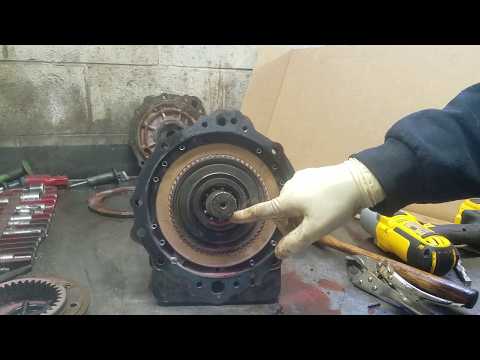
What Chris sees on the bench
- A groove worn into the bearing where a loose coupling has been beating against it.
- Wear on the output coupling itself. On a coupling off a 1013, the nut had backed off at some point and the coupling went up and down and wore a groove.
- A worn chamfer edge on the bottom side of the output flange. That's where you look to see if the coupling ever loosened up.
- A nut that someone had Marine-Texed onto the shaft because it had loosened up.
What causes it
The output coupling nut has a nylon locking ring, and that ring isn't really meant to be reused. When the nut loosens up, the coupling can move in and out and beat against the bearing behind it.
Fix and prevention
It's best to buy a new nut. If you're only replacing the rear seal on a cast-iron reduction unit, it's your call. You can reuse the old nut and put some Loctite on it, and Chris has done that in the field. The new nuts aren't that cheap, but as Chris told one customer, it's great insurance, because you know you're not going to have any issues. We stock the output nut ($47.46), which fits all models.
When Chris sets the nut, he fills the cavity behind it with Ultra Black Permatex, then uses the nut with the washer on it to seal the surface. Back in the 60s, 70s and 80s nobody used any sealant there and never had any problems, until one leaked. Some manufacturers, even ZF, use an O-ring in there to seal off the splines.

When to call
If you've got play in the output coupling or a groove on the coupling, call (804) 333-3677, Monday through Friday 9 to 3 Eastern, or email sales@halemarine.com.
Related reading: why you never paint the coupling face and Velvet Drive torque specs.